Sunday, October 1, 2017

Monster Month: Minecraft Edition

It's October, and that means Halloween season. This year I'll be doing something a little different: exploring the lore of the fun yet spooky global pastime, Minecraft.

Now Minecraft has always been a bit vague on its lore, but it is there if you know where to look. For example, last year a new skin pack introduced us to the Campfire Tales.


Even if it's just a skin pack, Mojang seems to be indicating that there's more to the Overworld, the Nether, and the End than even the most dedicated explorers know: worse things than the Endermen, Ghasts, and Withers. So I'm going to take some of these terrors and horrors and see if I can shed some light on them.


This site started as a blog about aliens, so let's kick things off by talking aliens!

Part I: Invaders from the Void

We all know the Villagers. They're a gentle, friendly people, making a living in their small settlements. They'd never hurt anybody, even in self-defense; that's what the Iron Golems are for.

Of course, they're not all like that. Most know of the outcasts, the "Illagers". Witches and Evokers, ax-wielding Vindicators, and the crafty Illusioners. Though by and large they live a simple life, the Villagers hide a great potential for good or ill.

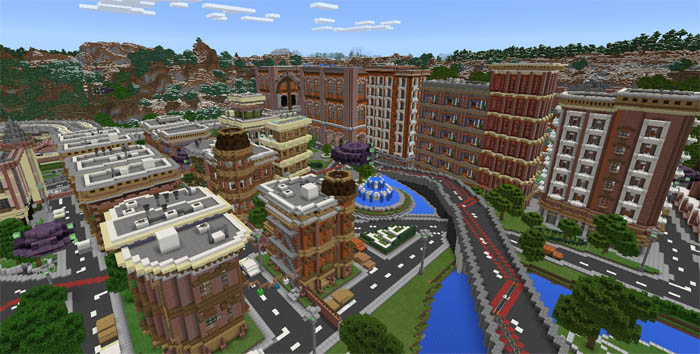
Rumors tell of a huge city built by a clan of particularly ambitious Villagers. Instead of passing the days farming and grunting at each other, they channeled their effort into construction. They didn't need to do it; they simply wanted to.
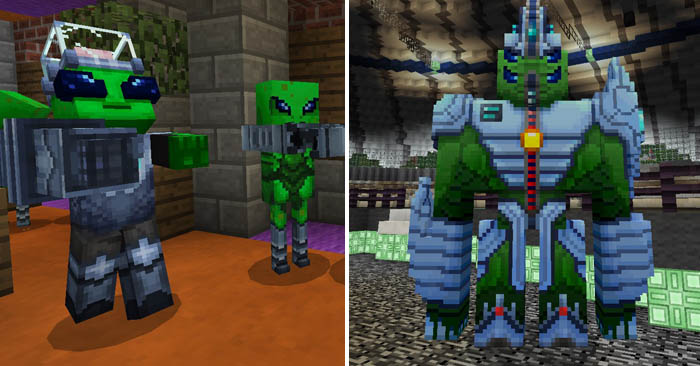
Image result for minecraft alien invasion addon
But the bigger they are, the harder they fall, and despite keeping the city streets well lit at night to ward off threats, the Villagers were beset by a group of griefers the likes of which the Overworld had never seen before.
Image result for minecraft alien invasion addon
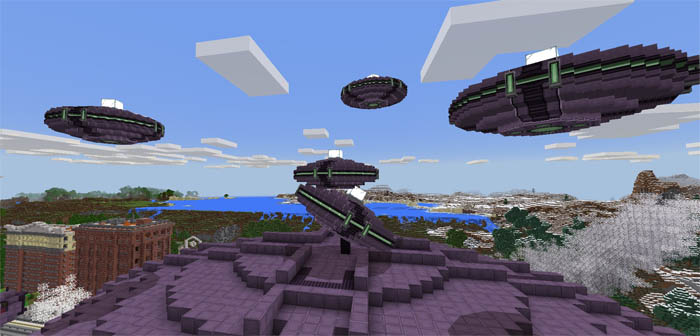
They came in massive flying saucers made of purple metal blocks nobody had seen before, lobbing explosives at the skyscrapers and disgorging troops: cyborg Alien Grunts with their mechanical arms outstretched like zombies, Alien Gunners with their oversized brains and plasma cannons to match, Alien Captains who could match a golem in strength, size, and endurance, and Alien Saucers patrolling the skies, bearing down on anybody who would duck their heads out of cover.
Image result for minecraft alien invasion addon
Nobody knew why, but their mission seemed clear: leave nothing left standing and nobody left alive.

Only that's not what happened. The Villagers were smart enough to know that in a city as big as theirs, there could never be enough Iron Golems to protect them. So every citizen, when they came of age, was issued a bow and trained in its use.

Suddenly the invasion was now a battle, as arrows and plasma flew through the air for days. Turns out all that alien TNT was so volatile that a single arrow in the right place could blow up an entire ship. The Aliens expected a raid on a civilian target, instead they got a strike on the equivalent of a military installation.

When it was all over, half the city was in ruins and many Villagers were gone. But the Aliens had fought to the last, and none were left. Scavenging the wreckage, the Villagers grimly buried their dead then began to rebuild.

Where did the invaders come from? Some said they originated in the Sky Dimension. Though others don't even believe it exists, and say they came from the Void around the world. Others say it doesn't matter or we'll never know. Perhaps they just don't want to ponder the answer because it's too terrifying to contemplate.

The lessons are twofold. Never prey upon the weak, because you never know what strength the weak may be hiding. And no matter how high you build, never become complacent. Always be ready to defend what you have wrought. For construction is easy, destruction is fun, but protection is hard and dull, but the most important of all.

Monday, September 25, 2017

Mass Effect: Magnificent Desolation


I have strong memories of the Mass Effect trilogy both good and bad, such that I still haven't touched the more-recently-released Mass Effect: Andromeda. Who's this "Ryder" character? What's a Pathfinder? As far as I'm concerned, you'll never be better than Commander Shepard.
MassEffect.jpg
The first Mass Effect game in particular delivered to me a unique experience that no science fiction game, not even No Man's Sky, was able to reproduce. Despite being firmly in the "space opera" subgenre rather than the exploration subgenre, it was perhaps the only game where I felt like an astronaut. Mass Effect 1 is notorious for its side-quest segments where you and your teammates traverse remote planets in a ground-effect vehicle known as the M35 Mako.
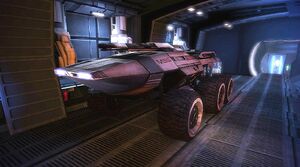
Mako 2
Raising gamers' blood pressure since 2007 or 2183.
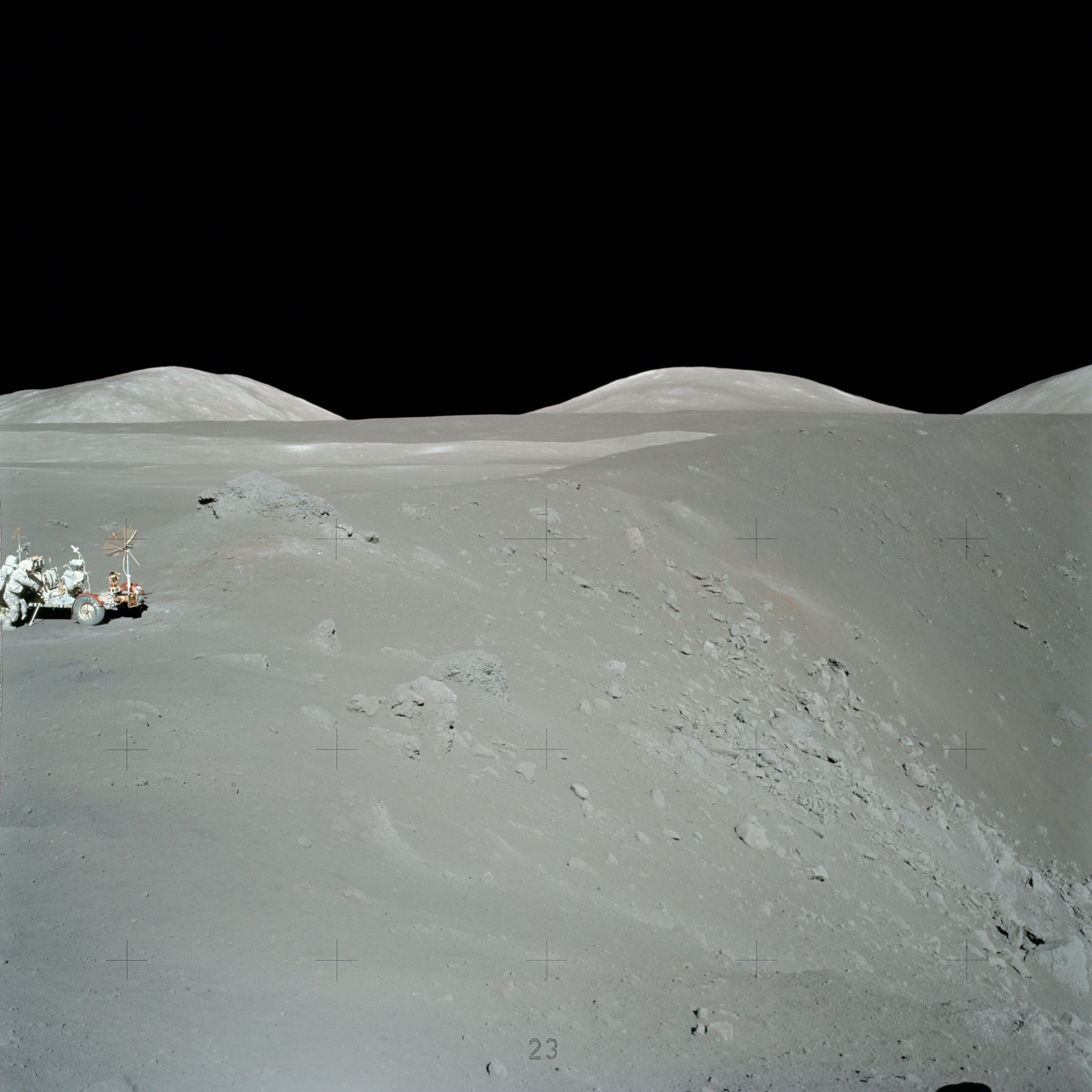
The sequels focused more on combat and less on the Mako's unwieldy controls and the long barren stretches between mission objectives, and while this may be an improvement from a game design perspective, I think something is lost when you can't take the time to appreciate the scenery, the "magnificent desolation" that Buzz Aldrin described when standing on the Moon.
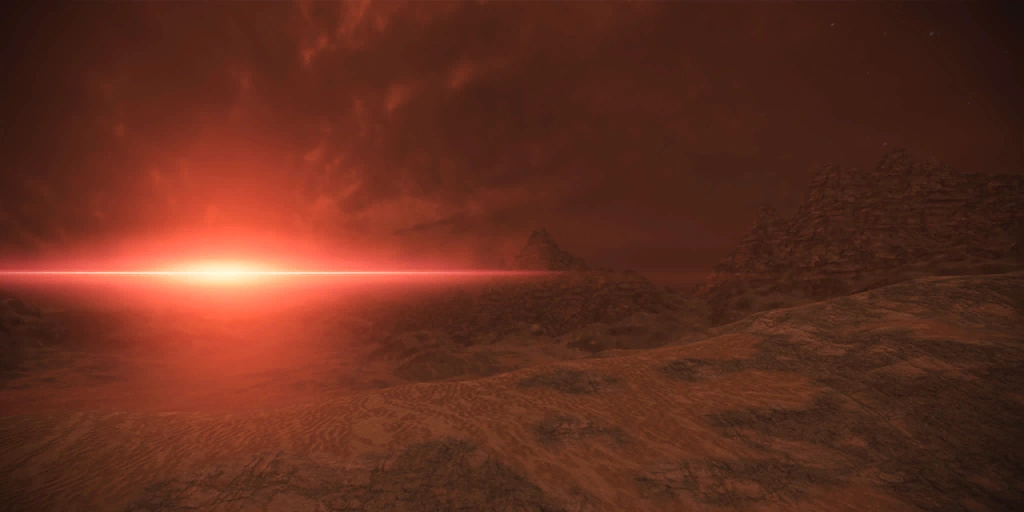
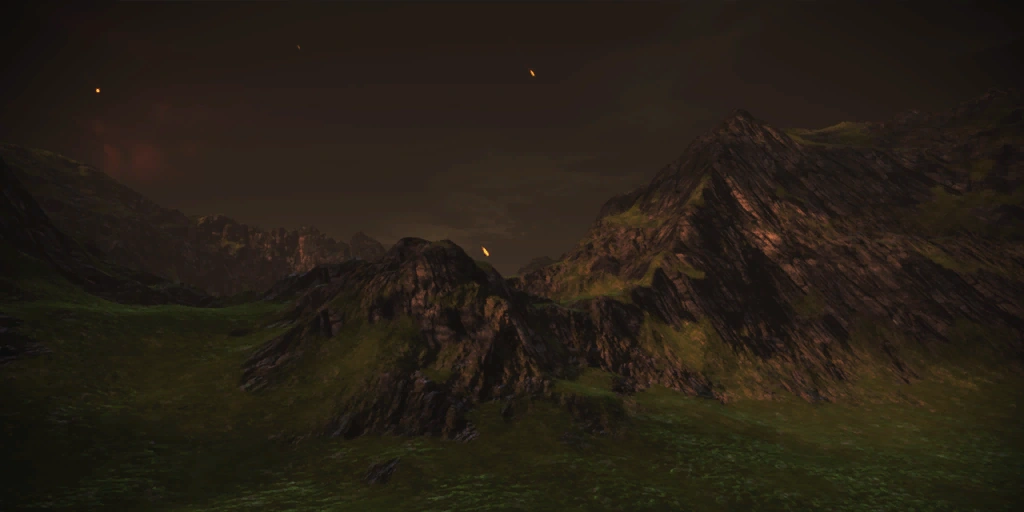
Not pictured: the planetoid that's due to crash in a few hundred years.
In a genre where most focus is given on habitable planets, and little consideration is given to biological or chemical barriers between planets and explorers, Mass Effect devotes a fair portion of its extensive background flavor text to the attributes of the lifeless planets that vastly outnumber the "garden worlds" of the Milky Way. Every solar system you visit is explorable; you can't land on every planet, but you can at least visit each one. You might expect that this gets old fast, but it doesn't; there's a surprising level of variation; the few dozen planets in this game feel more distinctive than the 18 quintillion in No Man's Sky. I've referenced before how much I love the colorful names given to the different regions of space accessible in the trilogy. Taken altogether, the series is, however you may feel about its storytelling missteps, a masterclass in worldbuilding.
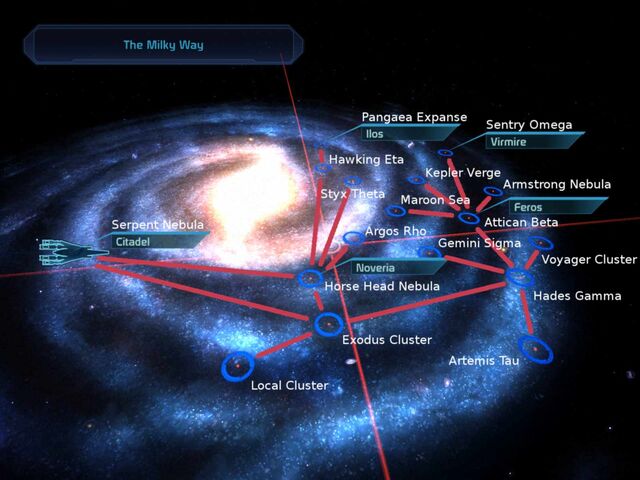
Mass Effect
Below are a few of the in-game encyclopedia entries on some of the planets, to give an idea of what I'm talking about.


Casbin is a classic 'pre-garden' terrestrial world, with conditions similar to
those on Earth millions of years ago. Its hot, humid atmosphere is mainly
composed of nitrogen and carbon dioxide. An increasing amount of the surface
is covered by simple lichen and algae. Should no unexpected calamity occur,
these tiny planets will change the atmosphere into an Earth-like nitrogen-oxygen
mix over the next few millennia.

Due to its potential for future habitability and sapient life, Casbin has
been designated a Sanctuary World by the Citadel Council. Landing is
prohibited by law, and any disturbance of the fragile young ecosystem will
result in harsh fines and imprisonment.

At present, the planet is passing through the debris trail of a long-period comet.


Antibaar is a cold terrestrial world with an atmosphere of methane and argon.
Its frozen surface is mainly composed of iron with deposits of magnesium. The
world has been noted as a possible target for long-term terraforming; if the
atmosphere could be increased to the thickness of Earth's, the global average
temperature would rise by 10 degree Celsius.

Antibaar's combination of low temperatures, high speed surface winds, and low
visibility make it dangerous to explore on foot.


Agebinium is a small terrestrial world with an extremely thin atmosphere of
carbon dioxide and krypton. Although the planet has a sufficient mass to
maintain a thicker atmosphere, much of it has been blasted away.

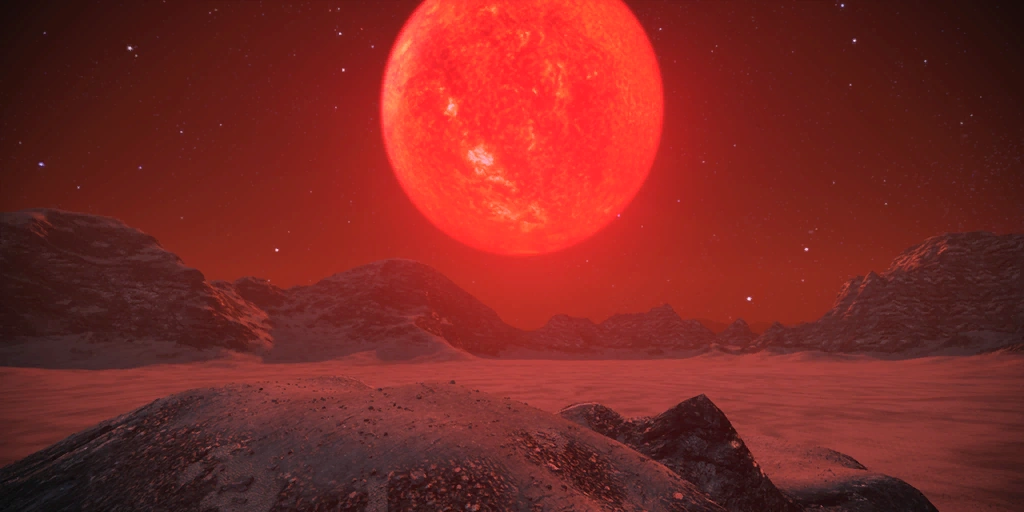
The red giant Amazon is a long-period variable star, currently at the nadir of
a 16-year cycle. At peak, its energy output doubles, lashing Agebinium with
intense heat and radiation.

The crust is mainly composed of aluminum with deposits of tin. Much of the
surface is coated with a fine silicate dust, which easily penetrates the
smallest cracks to foul machinery.


Edolus is a terrestrial planet with an atmosphere of carbon dioxide and
nitrogen. Edolus's surface is covered in wide deserts of silicate sand, with
only a few areas of igneous rock highlands to break the abrasive, dust-chocked
wind.

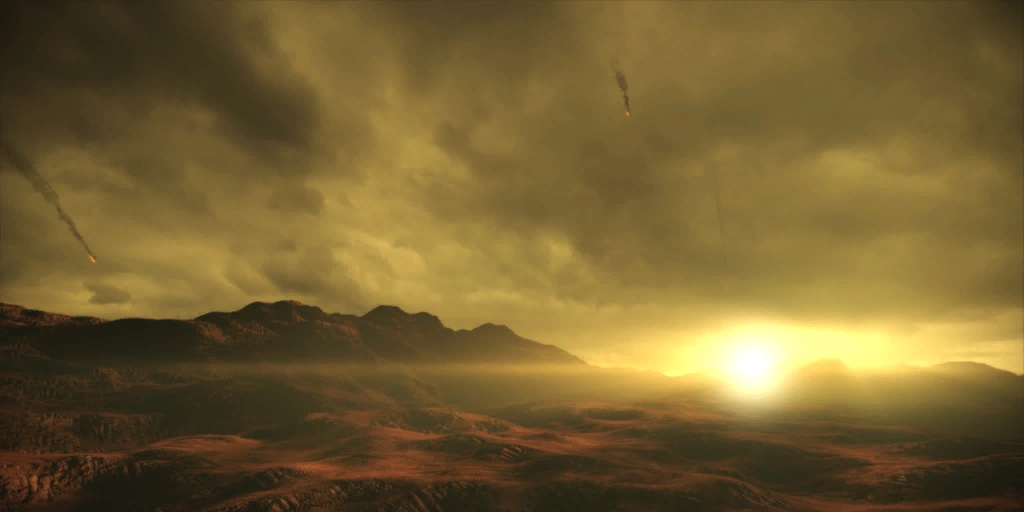
Edolus's orbit is congested with debris thrown inwards by the gravity of the
gas giant Ontamaka. Due to a high rate of meteor impacts, exploration is
highly dangerous.


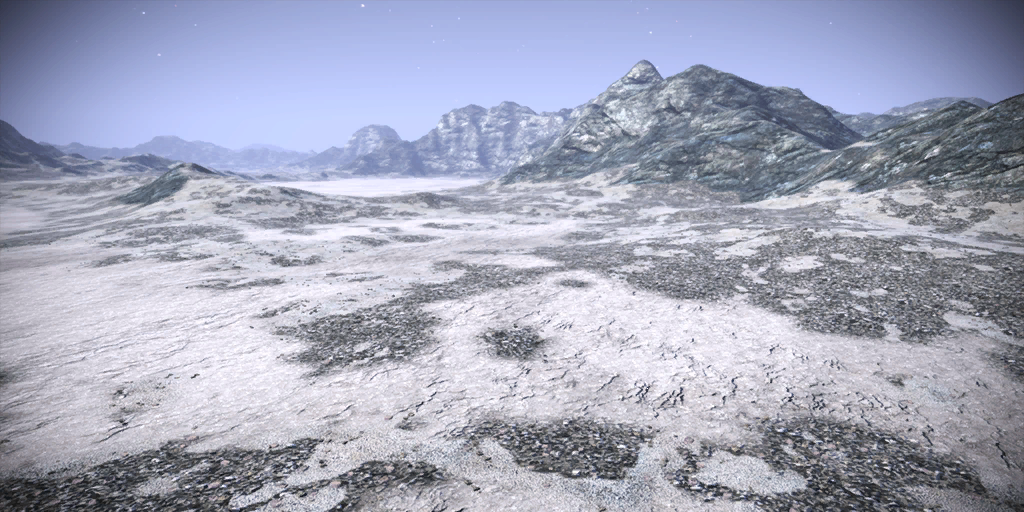
Chohe is a terrestrial planet whose surface is mainly composed of aluminum, with numerous deposits of calcium. Though it has enough mass to retain a dense atmosphere, Chohe is nearly a vacuum. This lack of atmosphere allows a moderate average temperature, but the differences between night and day are extreme.

The surface of Chohe's sunward-facing side is usually covered by a haze of volatiles (mainly water vapor and carbon dioxide), which return to the ground as frost over the course of the long, cold night.


The Sirta Foundation has established a research outpost on Chohe to investigate the native subterranean life of Chohe, which shows incredible resilience to extremes of heat and cold.


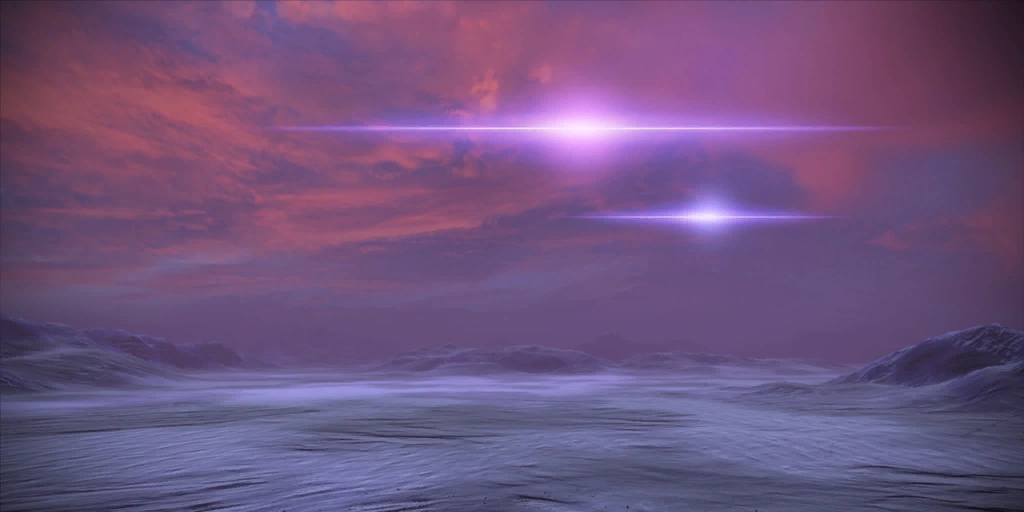
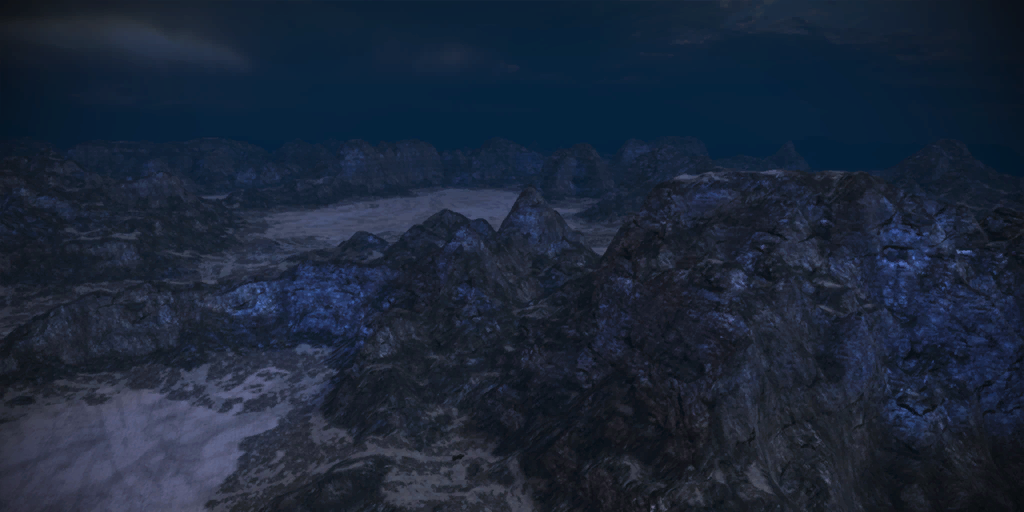
Amaranthine is a chilly rock world with an atmosphere of carbon dioxide and nitrogen. Its frozen surface consists largely of light titanium and aluminum oxides, with deposits of thorium and other heavy metals located in the deep crust. Amaranthine was named by the human poet Sofia Cabral during her tour of duty aboard the Alliance surveyor ship Kupe. Under the dim light of the red dwarf Fortuna, the surface of this world is lit in rich twilight blues and purples even at midday.


Nodacrux is a verdant world with abundant water, temperate climate, a thick oxygen-nitrogen atmosphere and a rich ecosystem. It would seem to be perfect for life. The relatively high percentage of oxygen makes humans feel energized and alive, though it has also allowed insect analogues to grow to frightful sizes.


Unfortunately, Nodacrux is a case of "almost but not quite." Thunderstorms are as common as on Earth, but in Nodacrux's thicker, oxygen-rich atmosphere, they are deafening and spark constant wildfires. More damning, however, are the large and ubiquitous tufts of pollen that float in the high-pressure air. In humans and other oxygen-breathing species, they cause severe or lethal allergic reactions.

On a separate topic, I know it's been a long time since I've last posted. I guess the more "novelty" you find in science fiction, the less it stands out to you. A kind of "novelty inflation." I started this blog to seek out new ideas in science fiction, and I've definitely found some.

The thing about novelty is that it shouldn't be confused for genuine quality. I think I'm done with my search for novelty, and will probably re-tool this blog to be a more general "stuff I like" blog. I'm still a fan of cool world designs and creature designs, and so those will be appearing on here. But I probably won't be restricting myself to space-based sci-fi. I've got something in mind for October and Halloween, so stay tuned.
Tuesday, February 14, 2017

Prefixed Biomes: How to Diversify Your Planetary Options

So I've seen Rogue One three times now. And unpopular as this position might be, I prefer The Force Awakens. Whereas on repeat viewings TFA got better in my eyes as I had a better appreciation of the characters and their story arcs, including one particular character's arc coming full circle after almost four decades, what stuck out for me rewatching Rogue One was how long the movie drags between its action scenes. As YouTubers Doug "Nostalgia Critic" Walker and Chris Stuckmann observed, Episode VII was excellent with a passable climax, whereas Rogue One is passable with an excellent climax. Well, your mileage will vary. I won't deny this is the Star Wars prequel I've hoped for since I was seven years old.

I'm not going to break down each planet like I did last year, as I feel I would just repeat myself. Instead I want to point out a trend I've noticed in the Disney era of the franchise. Rogue One is the eighth theatrical film in the Star Wars franchise, and at this point one would think the series would have run out of biomes to steal from Earth to make into whole planets. And, well, you'd be half right.

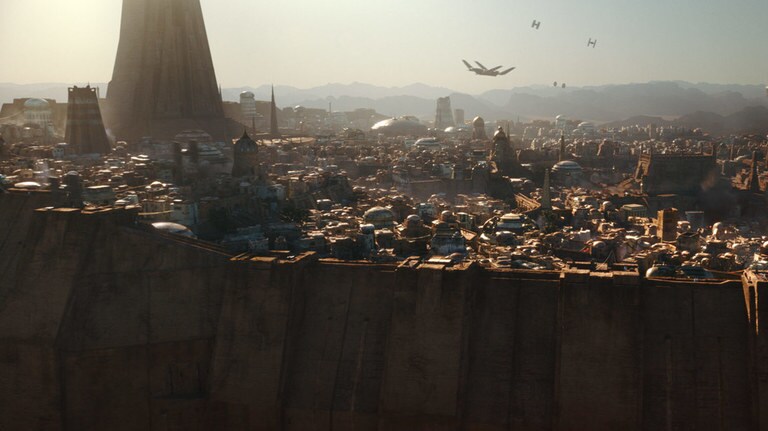
Let's look at Jedha:
Jedha
This is the second desert planet to appear in a movie's teaser and make fans ask, "Is that Tatooine?" Thankfully the answer is no; revisiting Tatooine is what Star Wars does when it's too afraid to try something new.
So how does Star Wars keep doing desert planets without making them all look the same outside the trailers? Because you can't just describe these planets with the word "desert."
Let's break down the desert planets in the movies:
Tatooine: "Lawless Desert"
Geonosis: "Termite-infested Desert"
Jakku: "Junkyard Desert"
Jedha: "Holy Desert"

Jedha distinguishes itself with its "Holy City," full of ancient history of followers of the ways of the Force. The fact it is another desert planet is incidental; it's not used as a gimmick. Same with Jakku; the focus is the wreckage of the war between the Rebels and the Empire. Furthermore, The desert aspects are different: Jakku resembles the Sahara, while Jedha is much less sandy and much more mountainous, having been filmed in Jordan.

(Also Jedha is actually a moon. Not that you could tell if it wasn't in the on-screen captions.)

Let's contrast with another mountainous planet that appears in the same film: Eadu.

The terrain is probably indistinguishable from Jedha's, but you can't tell and/or don't care because the climate is opposite. And based on the brief view from space in the film, the whole planet looks that way. So instead of two "mountain" planets, we have "arid mountain" and "monsoon mountain" planets that look nothing alike. Similarly, contrast the two ocean worlds Mon Cala and Kamino. One has permanent rainstorms, the other has a perfectly mundane climate. Contrast the wealthy city planet Coruscant with the crime-infested city moon of Nar Shaddaa (it's in the comics).

When you use just one element at a time, once you run out of elements you must start repeating yourself. Combine two elements and suddenly you have exponentially more options. So next time you brainstorm, throw two ideas in a blender, and see what comes out. You just may strike gold.

Sunday, September 4, 2016

Goofus and Gallant: Contrasting No Man's Sky and Obduction

So No Man's Sky finally came out last month, to great fanfare followed quickly by thrown tomatoes.
I'll do my best not to make this piece about developer Hello Games's overpromising and underdelivering after two years of hype; much has been written and said about that elsewhere. Let me just sum up my sentiments with the observation that when your development staff has a headcount less than that of a private elementary school class, maybe don't literally promise the universe.

The game itself is not strictly bad. Even after all the disappointment I'm glad I purchased it and played it. And I applaud the developers for attempting to break the mold in modern gaming. Unfortunately the game is plagued by numerous baffling design choices that all add up to a sub-par gaming experience:

  • If the game is about open-ended exploration, why do things like life support, ammunition, mining beam charge, and starship fuel all deplete so quickly? It ruins the one thing the game has going for it: immersing yourself in an alien world.
  • Unobtrusive "Achievement Unlocked" notifications have existed for over a decade now; why must the user interface be hijacked for 15 seconds every time a new achievement Milestone is awarded?
  • Why does spacesuit-Siri feel the need to notify you "LIFE SUPPORT POWER LOW" when your power supply is only at 75%? And again at 50%? At 25% it starts to make sense, but most gamers are smart enough to keep an eye on a power meter like that. In fact in the age of the cell phone, I'd say most people in general have been trained on that.
  • Why is the player's spacesuit so vulnerable to environmental hazards? It's a SPACE suit; it's supposed to be sealed. Toxins should not be a threat. Neither should going underwater!
  • If the game is all about boldly going where no one has gone before, why does every single planet, without fail, contain multiple outposts manned by members of the three alien species in the game?
  • Did this game really need 18 quintillion planets? I would've thought 18 trillion would do.

I think the biggest problem with the game is that ultimately all the planets feel the same. The game goes for a colorful aesthetic, which is good because too many games focus on a very limited "real is brown" palette. Unfortunately that distinct aesthetic permeates the entire game universe, and as a result the planets all start to feel the same.
Look at these three screenshots I took from three different planets:


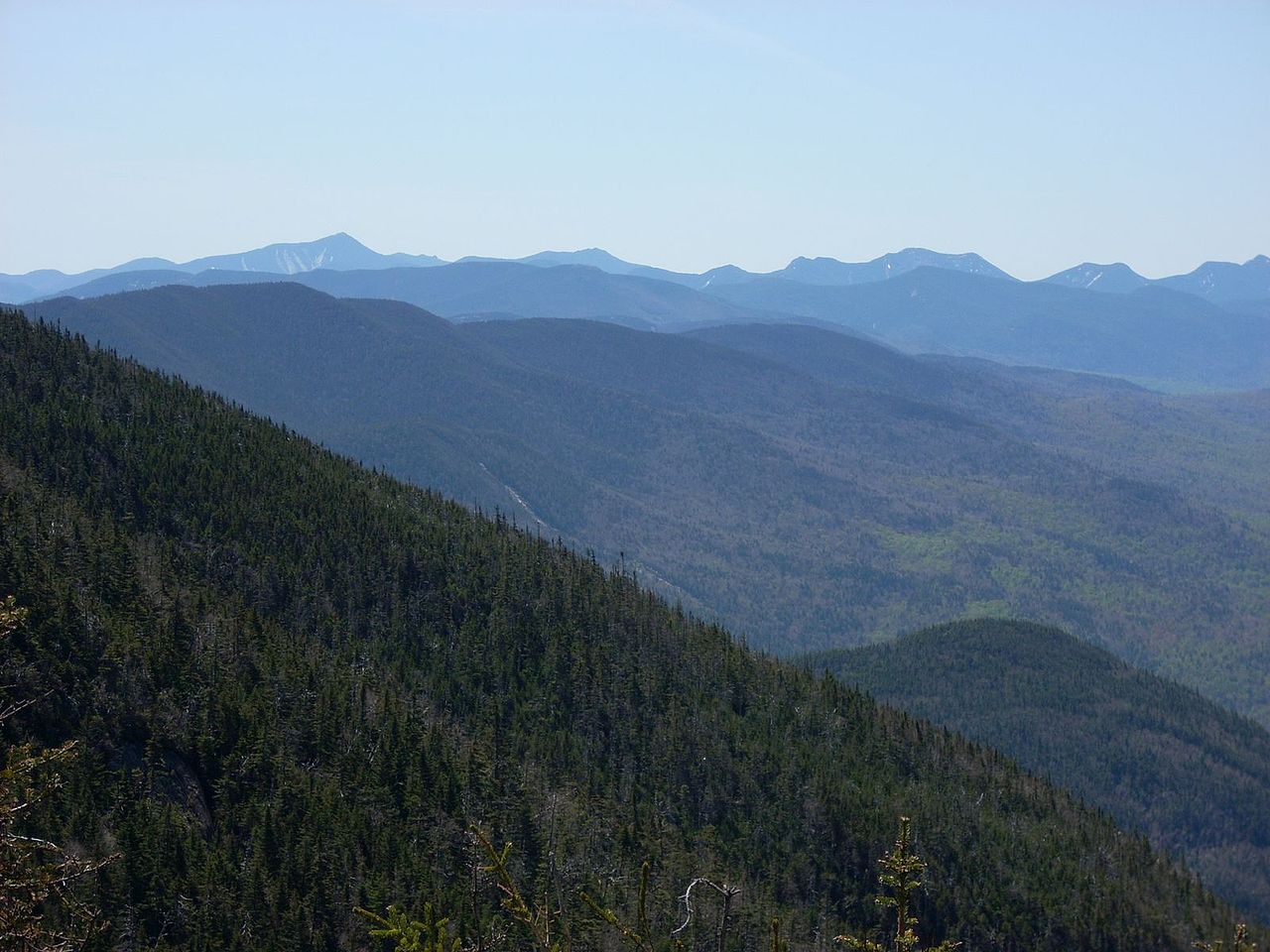
Now compare with these three images of three real-life worlds: Earth, the Moon, and Mars:

I will admit that there is definitely some variation between planets in the game, just not enough to prevent them from gradually blurring together in one's memory after several hours. There's a reason I don't have many screenshots besides the ones above; I just don't find much reason to do so when I'm playing. The problem seems to be that while the planets are different colors, they all have the same level of colorfulness. There are no stark, monochromatic planets to contrast with the colorful ones. Furthermore, there is no biome variation on any of the planets; each of those screenshots could be considered representative of their entire planets. The only variation is in the terrain. That's excusable on barren planets, but on life-bearing worlds? Expect to see the same plants no matter where you land. If I used that photo of Earth to represent all environments on Earth, anybody criticizing me would be right in doing so. The Moon and Mars are more representative, but Mars does have its polar ice caps. I haven't seen ice caps on a single planet in the game. Contrast this with Minecraft; that game has forests, plains, mountains, oceans, deserts, icy wastelands, and even mushroom forests.

A couple weeks after No Man's Sky was released, I purchased Obduction.
This is the long-awaited return of Cyan Worlds, creators of the Myst series I talked about before. And it is glorious. The game only features four alien worlds (sort of), but each of those worlds is hand-crafted by the developers rather than procedurally generated.

Naturally my favorite is the purple planet surrounding the displaced village of Hunrath.

Wild rock formations, some of them floating. All with a purple tint. At least two other planets are visible in the sky, and both of them appear to be habitable. Now in No Man's Sky, if I see another world in the sky I could fly to it, but I would also know that it would be little different from the planet I was currently on. Here the worlds in the distance are left to the imagination. And as anybody who was excited and then disappointed for No Man's Sky is undoubtedly aware, one's vague imagined idea tends to be better than reality. It's not often that creators are able to meet an audience's expectations.

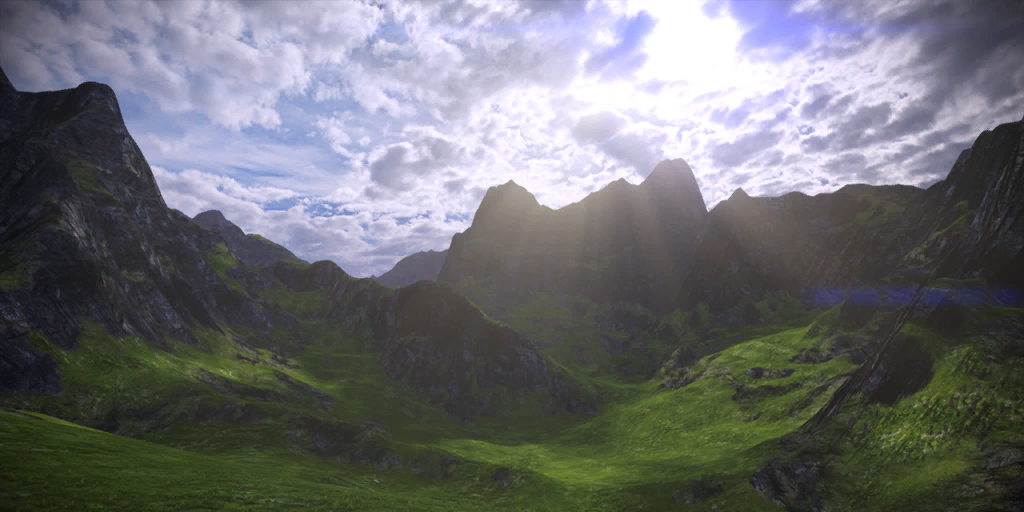
The other planets are, for the most part, conventional biomes that will be familiar to Earth-dwelling players. Though some impressive vistas are still present.


This game cost $30 to No Man's Sky's $60, but it only took about 8 hours to complete, and being a puzzle game, its replay value is limited; once you've solved a puzzle once, solving it again becomes trivial. Despite this, I still consider Obduction the better deal of the two games. No Man's Sky has theoretically infinite replay value, but there's no reason to keep going because every hour played will be fundamentally the same as every previous hour played. The two "story" goals in the game, the "Path of the Atlas" and the "get to the center of the galaxy" goal, have practically nothing to offer once achieved. And I'm not spoiler-warning that, because potential buyers deserve to know what they're getting into. Obduction, on the other hand, actually has a story that motivates the player to keep going. Even Minecraft has a dragon waiting to be slain, even if there's practically no indication of it in-game. And I sincerely doubt that No Man's Sky will ever produce a creature as distinctive and memorable as the Creeper or the Enderman.

And yet, despite everything, I don't regret purchasing No Man's Sky. I got to play a game with alien worlds unlike any I had seen before. I don't fault the developers for trying to make a game that breaks the mold. But when held up next to Obduction, we see that one still cannot automate creativity. Human-crafted settings blow the procedurally-generated settings out of the water, and No Man's Sky's quantity cannot match Obduction's quality.

I hope that lessons will be learned from No Man's Sky. I hope that procedural generation can be leveraged to help developers - or even writers and concept artists in other media - brainstorm new settings. And I hope that someday we can get the space exploration game we were all hoping for.

Saturday, July 30, 2016

Best of Pokémon

I guess with Pokémon Go becoming the defining moment of pop culture this year, now would be a good time to talk about the visual design involved in the long-running franchise. I haven't jumped on the Pokémon Go bandwagon but only because my phone's too old to run the app.

I've only played the original Pokémon Red from the original Game Boy, but from what I understand, the basics of gameplay have remained through the years, though the number of species has grown from 151 to over 700. Though "species" is a word I hesitate to use because of one of the series' most fundamental aspects, the poorly named "evolution."


(All images taken froBulbagarden.)

What the series calls evolution would be better called metamorphosis, as a single creature changes its form dramatically over the course of its life cycle, like a caterpillar to a butterfly or a tadpole to a frog. For example, I like how the weak Magikarp, resembling a fish, transforms into Gyarados, a powerful creature resembling a Chinese dragon. There aren't many works of science fiction that come immediately to mind that use metamorphosis, and I think the basic concept is something with a lot of potential when creating a fictional world.
However, this means that Magikarp and Gyarados are the same species, just at different points in its life cycle. So the number of Pokémon species is likely a lot lower than the number of what people call "Pokémon."


Another aspect of the series that appeals to me is the creatures that are part animal and part plant. Most of these are "Leaf-type," such as the Venusaur family, or Oddish and its evolutions, which make me think of Pikmin (heeeey...)


I've always wondered what kind of conditions would give rise to motile plants. Even on Earth, in regions with wildly varying seasons, plants would rather stay put and go dormant than move. (Maybe that's for the best...)


Vulpix and Ninetales make me wonder why we never see animals on Earth with more than one tail.


Nidoking and Nidoqueen bring to mind the concept of sexual dimorphism, where the males and females of the same species look markedly different.


Metagross just looks cool; a giant quadruped crab.


Gigalith looks similar, with an exoskeleton that seems to serve as camouflage in a volcanic environment.


As does Scyther, with its exoskeleton and massive claws.

For some reason, though, my favorite Pokémon is Lapras.

It has no evolutions, it's just a plesiosaur with a turtle shell, that's capable of being domesticated and ridden across the ocean. The only way it could be better is if it could fly. A simple yet creative design with appeal to one's inner child, and in my opinion, a good example of what makes Pokémon so popular.

Saturday, June 25, 2016

Anatomy of a Creeper

Minecraft is known for many things. Unbridled creativity. Wasted time. YouTube videos. Aaaaand these guys:
Creeper.png
"ssssssssss..."
It's not every day a programming mistake turns into a franchise mascot, but when a programmer accidentally mismatched the height and length of a pig, the Creeper was born.

They're best known for hissing and exploding, wrecking your stuff and ruining your day. Obviously video game logic at work, but could there be another explanation?
That's not quite what I had in mind, but A+ for effort.
Why does the creeper explode? Maybe it's not on purpose, maybe a real-world creeper would explode by accident because of a buildup of methane? Maybe creepers build up flatulence but are bad about...releasing gas?

In Minecraft, it's possible to kill a creeper without setting it off. And guess what they drop? Gunpowder.
Gunpowder item.png
Gunpowder, in its most basic composition, consists of three chemical components: nitrate (supplying oxygen), carbon (supplying fuel), and sulfur (lowering the ignition temperature while also supplying fuel). So while I don't know what the ins and outs of the production process might be (and to be honest I don't want to think about then too deeply), it's not impossible to imagine a scenario where a creature produces a buildup of organic gunpowder in its own body.

But why would evolution select such a creature with a disposition for self-destruction. Well, in Minecraft, it's possible to breed passive "mobs" like cows, pigs, and chickens, but good luck breeding hostile mobs. So we really know nothing about their "society." Maybe they're secretly a hive-based species? Bees die after using their stingers, but because they do so to protect their hives, it's a factor in favor of species survival, not against. And Telltale's Minecraft: Story Mode does see them attacking in groups. Plus, you could also consider the fact that Creative Mode lets you spawn creepers from eggs:
Presumably laid by a Yoshi.
True, you can spawn any mob from eggs, but it's all we have to go on. Still, it all makes a kind of sense. A creature that is hatched from an egg in an underground hive, explores the environment while camouflaged to look like foliage, and explodes if its hive is threatened. That definitely sounds like a creature out of a pulp serial. If any Minecraft modders are reading this, I'd like to see a new mod where the player can stumble across an underground creeper hive, and if they're strong or clever enough, fight and slay the Queen Creeper. I'd play that game.

(Edit: Turns out Game Theory addressed the same topic in a lot more depth. His conclusions differ from mine, but I still think it's a great video, definitely worth a look.)

Saturday, June 18, 2016

Naming The Most Interesting Exoplanets in the Galaxy - Part 1

So the first wave of official IAU names for extrasolar planets went really well, but it ignored a lot of the really cool planets. I can understand why this was done, instead focusing on planets with enough evidence of their existence to be declared "confirmed", but it seems to me that it's the interesting ones that merit naming the most.

With that in mind, the following are some of my proposals for names for discovered exoplanets, based on the few details we know about them. At some point I hope I can make a poster of them or something. Keep in mind that I'm not necessarily advocating these names be made official by the IAU just yet; our understanding of these planets is constantly evolving, and most of what we "know" about them is really conjecture. But my last piece was about figuring out whether Starkiller Base was terraformed; our main priority here is speculating and having fun with scientific rigor a close second at best.

Easter
Image source: NASA


Designation: WASP-12b
Constellation: Auriga
Distance from Earth: 871 ly
With one of the tightest orbital paths known, orbiting its sun in just 26 hours(!), tidal forces stretch this planet into an egg shape. Hence the name.
You know, because...Easter eggs.

Plutus
Image Source: NASA


Designation: PSR J1719-1438 b
Constellation: Serpens
Distance from Earth: 4000 ly
A pulsar planet that is believed to be composed of solid diamond. Thus, I think it should be named for the Greek god of wealth (from which we get the word "plutocracy.")

Diadem
File:J1407b seen from its exomoon.png
Source.


Designation: J1407b
Constellation: Centaurus
Distance from Earth: 116 ly
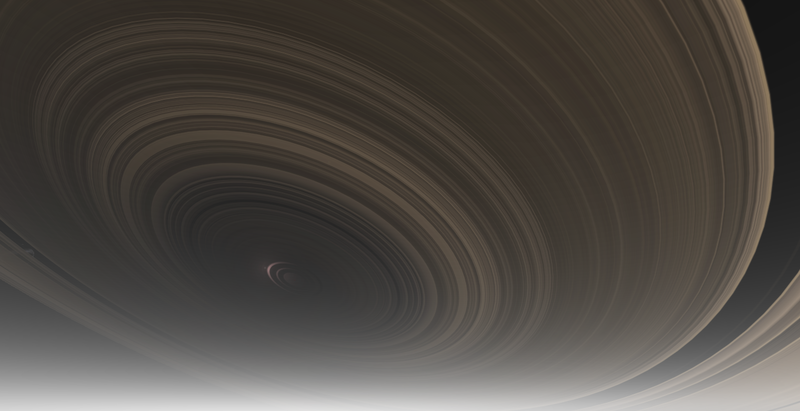
Remember that Super Saturn discovered last year? The term "diadem" basically means "crown," so I think that fits this planet's most prominent feature.

Yasur
File:Artist’s impression of Corot-7b (alternative).jpg
Source.
Designation: Corot-7b
Constellation: Monoceros
Distance from Earth: 490 ly
This is a planet that could have extreme volcanic activity or even seas of lava, so I named it after Mount Yasur, a volcano in Vanuatu.

Mustafa
Source: David Aguilar, Harvard-Smithsonian Center for Astrophysics


Designation: Kepler-36b
Constellation: Cygnus
Distance from Earth: 1530 ly
OK, I admit I picked this name as a reference to Mustafar from Star Wars Episode III. But when I first saw the above artist's concept, I was reminded of this shot from the movie:
"That's no moon." No really, it's not a moon, it's a planet.
Volcanic planet backdropped by purple gas giant? Too on the nose to pass up. This is only reinforced by the supplemental material which confirms that Mustafar is not a moon of that gas giant, but stuck in a tug of war between two gas giants, tidal forces producing extreme volcanic activity. With the Kepler-36 system, there seems to be only one gas planet involved in this gravitational tug of war, but that's still close enough for me.
Not sure what to name the other planet though. "Mustafa" is a common Arabic given name and an epithet for the prophet Muhammad (meaning "the chosen one"), so maybe we can complement that by giving Kepler-36c a feminine name of similar significance: Khadija, the name of Muhammad's first wife. I think this works because it paints this solar system in a more positive light, seeing the volcanism not as a state of destruction but as a thing of natural beauty in the universe.